

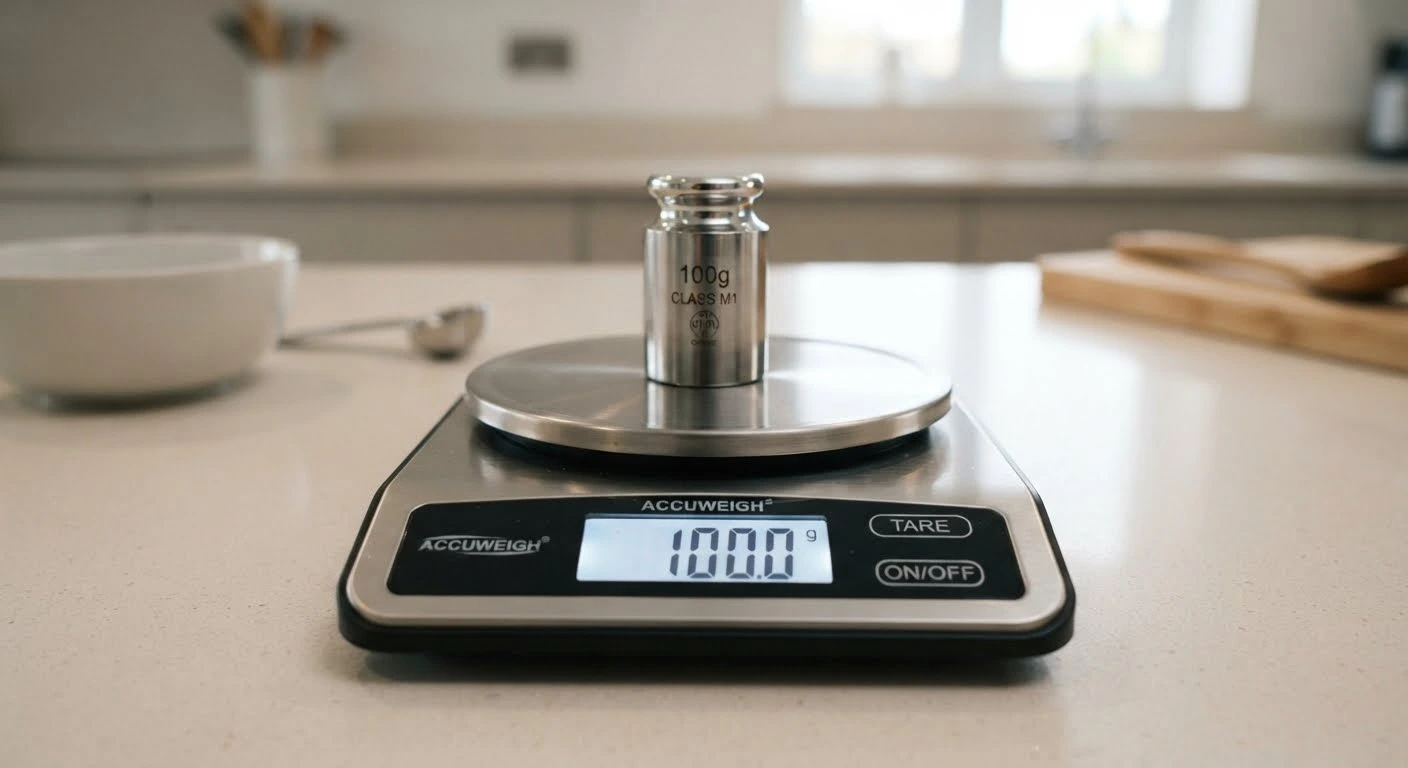
Weighing 100 grams is a common measurement used in cooking, baking, science experiments, shipping, and everyday activities. But how much is 100 grams, and how can you estimate this weight if you do not have a kitchen scale? Understanding this measurement becomes easier when you compare it with familiar objects, such as a small apple, a deck of cards, a bar of soap, or a package of food.
100 grams equals 0.1 kilograms, approximately 3.53 ounces, or about 0.22 pounds. Although the weight may seem small, 100 grams can represent very different quantities depending on the material. A 100-gram portion of flour takes up more space than 100 grams of a dense substance such as sugar or metal.
In this guide, you will learn what weighs approximately 100 grams, how to convert grams into other units, and how to measure this amount accurately without making common measurement mistakes.
What Does Weighing 100 Grams Mean?
Grams are a metric unit used to measure mass. They are commonly used for food portions, small household items, ingredients, and lightweight packages.
When an object weighs 100 grams, its mass is one-tenth of a kilogram.
Here are the basic conversions:
| Measurement unit | Equivalent of 100 grams |
|---|---|
| Grams | 100 g |
| Kilograms | 0.1 kg |
| Milligrams | 100,000 mg |
| Ounces | Approximately 3.53 oz |
| Pounds | Approximately 0.2205 lb |
| Milliliters of water | Approximately 100 mL |
| Troy ounces | Approximately 3.215 troy oz |
These conversions are useful when following recipes, comparing product labels, or measuring ingredients with a scale that uses a different unit.
Remember that grams measure mass, while ounces can refer to either weight in everyday usage or a unit of volume when discussing fluid ounces. Grams and fluid ounces are not directly interchangeable without considering the substance’s density.
What Objects Weigh Approximately 100 Grams?
If you do not have a scale, familiar household items can help you visualize 100 grams. However, these examples are estimates, not exact standards. Actual weights vary according to size, brand, material, and moisture content.
1. A Small Apple
<AsyncImage query=”small red apple isolated on white background” aspectRatio=”5:4″ width=”100%” />
A small apple may weigh close to 100 grams, although many apples weigh considerably more.
For a quick comparison, a small apple weighing 100 grams provides a convenient visual reference. If you need an accurate measurement for a recipe or nutrition calculation, weigh the apple rather than relying on its appearance.
2. A Small Chocolate Bar
<AsyncImage query=”small plain chocolate bar on white background” aspectRatio=”5:4″ width=”100%” />
Some chocolate bars are sold in packages weighing 100 grams. This makes a labeled chocolate bar a useful reference when estimating the weight of other items.
Check the package weight, because individual chocolate bars vary significantly in size.
3. A Bar of Soap
<AsyncImage query=”single rectangular wrapped bar of soap isolated white background” aspectRatio=”5:4″ width=”100%” />
Some standard bars of soap weigh around 100 grams when new. However, soap bars are sold in many different sizes, and a bar loses mass as it is used.
Look for the stated net weight on the packaging if you want a more dependable reference.
4. A Portion of Flour
<AsyncImage query=”small bowl of white flour on kitchen scale” aspectRatio=”5:4″ width=”100%” />
A 100-gram portion of flour is a common baking measurement. Unlike a solid object, flour occupies a variable volume because it can be packed loosely or tightly.
For consistent baking results, measure flour by weight whenever possible. The number of cups required depends on the type of flour and how it is measured.
5. A Small Package of Food
<AsyncImage query=”small sealed 100 gram food packet on white background” aspectRatio=”5:4″ width=”100%” />
Many packaged foods are sold in 100-gram portions. Examples may include nuts, snacks, dried fruit, cheese, or other small food products.
The package label is usually the easiest way to confirm the net weight. Be careful not to include the weight of the wrapper or container unless you specifically want the total packaged weight.
How to Measure 100 Grams Without a Scale
You can estimate 100 grams without a scale, but the accuracy depends on the object or ingredient. For precise cooking, scientific work, or shipping, a digital scale is the better option.
Method 1: Use a Product With a Labeled Weight
Look for an unopened product that clearly states its net weight. For example, if a package contains 200 grams of food, half of its contents should weigh approximately 100 grams when divided evenly.
This method works best with products that can be divided consistently. For irregular items, dividing by eye may produce an inaccurate result.
Method 2: Divide a Larger Quantity
If you have 500 grams of an ingredient, divide it into five equal portions.
500 ÷ 5 = 100 grams per portion.
Similarly, a 1-kilogram package contains ten portions of 100 grams each.
This method is useful when you have a known total quantity but no scale available for each portion.
Method 3: Use Measuring Cups for Water
Water offers a straightforward volume comparison because, under ordinary conditions, 1 milliliter of water has a mass of approximately 1 gram.
Therefore:
- 50 mL of water weighs approximately 50 grams.
- 100 mL of water weighs approximately 100 grams.
- 200 mL of water weighs approximately 200 grams.
This relationship applies to water, not automatically to flour, oil, sugar, or other materials. Their densities differ.
Method 4: Use a Kitchen Scale
A digital kitchen scale is the most reliable way to measure 100 grams.
- Place the scale on a flat, stable surface.
- Turn it on and select grams (g).
- Put an empty bowl or container on the scale.
- Press the tare button to reset the display to zero.
- Add the ingredient until the display reads 100 grams.
For ingredients that are difficult to remove in small amounts, add them gradually as you approach the target.
How Much Is 100 Grams in Cups?
There is no single cup measurement for 100 grams because grams measure mass and cups measure volume. The conversion depends on the density of the ingredient.
Here are approximate examples using common U.S. measuring cups:
| Ingredient | Approximate volume for 100 grams |
|---|---|
| Water | 0.42 cup |
| All-purpose flour | 0.8 cup |
| Granulated sugar | 0.5 cup |
| Butter | 0.44 cup |
| Uncooked white rice | About 0.5 cup |
These are general estimates. Flour can vary considerably depending on how it is scooped, while different types of rice and sugar may have different densities.
For the most reliable results, especially when baking, use a scale and measure the ingredient in grams.
Is 100 Grams Heavy or Light?
A 100-gram object is generally considered lightweight in everyday use. It is easy to hold in one hand, and many small household products and food portions fall near this weight.
However, whether something feels heavy depends on its size, shape, density, and how you hold it.
For example, 100 grams of feathers occupies much more space than 100 grams of metal, even though both have the same mass. A compact metal object may feel denser, while a large bag of lightweight material may be easier to lift than its size suggests.
The important distinction is that equal mass does not mean equal volume.
Why Is Measuring 100 Grams Important?
Measuring 100 grams accurately can be useful in several everyday situations.
Cooking and Baking
Recipes often specify ingredients in grams to improve consistency. Measuring 100 grams of flour or sugar by weight is generally more repeatable than estimating the amount with a cup.
Nutrition and Portion Control
Food labels frequently provide nutritional information per 100 grams. Measuring a portion helps you compare products and calculate the nutrients in the amount you actually consume.
For example, if a food contains 250 calories per 100 grams, a 50-gram portion contains approximately 125 calories.
Shipping and Mailing
Small packages and products may be weighed in grams. Accurate weight helps with product packaging, inventory, and shipping calculations, although postage charges may also depend on package dimensions and the carrier’s rules.
Science and Education
In school experiments, grams are commonly used to measure small quantities of materials. Measuring 100 grams provides a convenient way to demonstrate mass, unit conversion, and basic calculations.
Jewelry and Small Objects
Grams can be used to measure the mass of small items, including certain jewelry pieces and components. Precious metals may also be measured in troy ounces, so confirm which unit a seller or specification uses.
Common Mistakes When Estimating 100 Grams
When measuring 100 grams, avoid these common errors:
- Confusing grams with milliliters: These units measure different properties. They are approximately equivalent only for water under ordinary conditions.
- Assuming every apple or soap bar weighs the same: Natural items and manufactured products vary in size.
- Ignoring packaging: A package’s gross weight includes its packaging, while net weight refers to the contents.
- Using cups for every ingredient: A cup of flour does not weigh the same as a cup of sugar or water.
- Confusing ounces with fluid ounces: Ounces commonly measure mass or weight, while fluid ounces measure volume.
- Relying on visual estimates for precise tasks: A scale is preferable when small differences matter.
Understanding these differences will help you measure ingredients, compare products, and interpret labels more accurately.
Frequently Asked Questions
1. How much is 100 grams in pounds?
100 grams equals approximately 0.2205 pounds. This is a little less than one-quarter of a pound.
2. How many ounces are in 100 grams?
100 grams equals approximately 3.53 avoirdupois ounces, the ounce unit commonly used for food and everyday products.
3. Is 100 grams the same as 100 mL?
No. Grams measure mass, while milliliters measure volume. However, 100 mL of water weighs approximately 100 grams under ordinary conditions. Other substances have different densities.
4. What household item weighs 100 grams?
A small apple, some bars of soap, and certain small food packages may weigh around 100 grams. Actual weight varies, so check the label or use a scale for accuracy.
5. How can I measure 100 grams without a kitchen scale?
You can estimate 100 grams by dividing a larger quantity with a known weight, using a labeled 100-gram product, or measuring approximately 100 mL of water. These methods are not equally accurate for all materials.
6. How many cups is 100 grams of flour?
One hundred grams of all-purpose flour is roughly 0.8 U.S. cup, depending on how the flour is measured and packed. Weighing it is more accurate than relying on volume.
7. How many tablespoons are in 100 grams?
The answer depends on the ingredient. One hundred grams of water is approximately 6.7 U.S. tablespoons, but 100 grams of flour, butter, or sugar will have a different tablespoon measurement because each ingredient has a different density.
8. Is 100 grams a lot of food?
It depends on the food. One hundred grams may be a small portion of some foods and a substantial portion of others. Nutritional value and fullness also depend on the food’s composition, not just its weight.
9. How many milligrams are in 100 grams?
There are 100,000 milligrams in 100 grams because one gram equals 1,000 milligrams.
10. How do I weigh exactly 100 grams?
Place an empty container on a digital scale, tare it to zero, and gradually add the material until the display reaches 100 grams.
Conclusion
Weighing 100 grams is easy once you understand the metric system and know a few everyday comparisons. One hundred grams equals 0.1 kilograms, approximately 3.53 ounces, and 100,000 milligrams. Small apples, bars of soap, and labeled food packages can help you visualize this amount, but their actual weights vary.
For accurate measurements, use a digital scale, particularly when cooking, tracking food portions, or measuring materials for a project. Remember that 100 grams represents the same mass regardless of an object’s size, even though different materials can occupy very different amounts of space.

Pingback: How Many Square Feet Will a Pint of Paint Cover?