

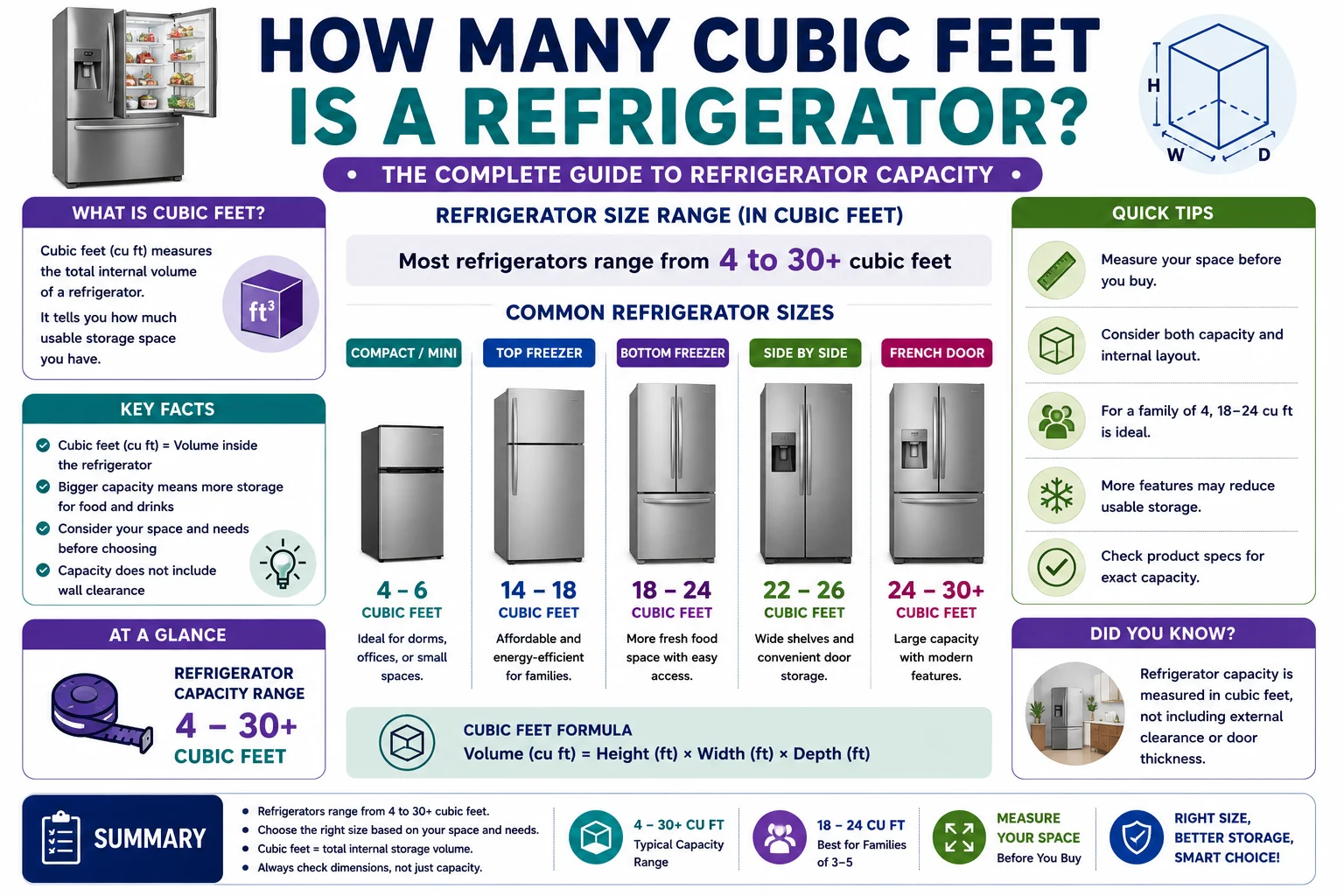
If you’re shopping for a new appliance, you may wonder: “how many cubic feet is a refrigerator?”
Refrigerator size is one of the most important factors when choosing a fridge for your kitchen. A refrigerator that’s too small may not hold enough food, while one that’s too large can waste energy and space.
Understanding cubic feet helps you compare refrigerator capacity quickly and choose the best size for your household.
This guide explains refrigerator cubic feet in simple terms, including average sizes, measurement methods, and buying tips.
Quick Answer: Average Refrigerator Size
👉 Most refrigerators range from 10 to 30 cubic feet.
However, the average household refrigerator is usually:
👉 18 to 25 cubic feet
This size works well for most families.
What Does Cubic Feet Mean in a Refrigerator?
Cubic feet measures the amount of storage space inside a refrigerator.
It includes:
- Refrigerator compartment
- Freezer section
- Shelving space
The larger the cubic feet, the more food the fridge can hold.
Simple Example
A refrigerator with:
- 20 cubic feet
has more storage space than: - 15 cubic feet
How Many Cubic Feet Is a Refrigerator (Detailed Breakdown)
Refrigerators come in several common size ranges.
Compact Refrigerators
Capacity:
👉 1.5–6 cubic feet
Best for:
- Dorm rooms
- Offices
- Bedrooms
- Small apartments
Small Refrigerators
Capacity:
👉 7–14 cubic feet
Best for:
- Singles
- Couples
- Small kitchens
Standard Refrigerators
Capacity:
👉 18–25 cubic feet
Best for:
- Families
- Everyday kitchen use
Large Refrigerators
Capacity:
👉 26–30+ cubic feet
Best for:
- Large families
- Bulk food storage
- Luxury kitchens
Refrigerator Size Categories
Here’s a quick overview.
| Refrigerator Type | Average Cubic Feet |
|---|---|
| Mini Fridge | 1.5–6 cu ft |
| Small Refrigerator | 7–14 cu ft |
| Standard Refrigerator | 18–25 cu ft |
| Large Refrigerator | 26–30+ cu ft |
Refrigerator Capacity Chart
Use this chart to estimate the right fridge size.
| Household Size | Recommended Capacity |
|---|---|
| 1–2 people | 10–14 cu ft |
| 3–4 people | 18–22 cu ft |
| 5+ people | 24–30 cu ft |
How to Measure Refrigerator Cubic Feet
You can estimate refrigerator size using measurements.
Step 1: Measure Dimensions
Measure:
- Width
- Height
- Depth
in feet.
Step 2: Multiply Measurements
Formula:
Length × Width × Height = Cubic Feet
Example:
6 ft × 3 ft × 2 ft = 36 cubic feet
Important Note
Actual usable storage space is usually smaller because shelves, drawers, and insulation take up room.
Choosing the Right Refrigerator Size
The best refrigerator size depends on your needs.
Consider Household Size
Larger families need more food storage.
Think About Shopping Habits
If you buy groceries in bulk, choose a larger refrigerator.
Measure Kitchen Space
Always measure:
- Doorways
- Cabinet clearance
- Available floor space
before buying.
Refrigerator Sizes by Household Type
Single Person
Recommended:
👉 10–14 cubic feet
Couples
Recommended:
👉 14–18 cubic feet
Small Family
Recommended:
👉 18–22 cubic feet
Large Family
Recommended:
👉 24–30 cubic feet
Compact vs Standard Refrigerators
There’s a big difference between compact and full-size refrigerators.
| Feature | Compact Fridge | Standard Fridge |
|---|---|---|
| Capacity | 1.5–6 cu ft | 18–25 cu ft |
| Best For | Small spaces | Family kitchens |
| Freezer Space | Limited | Larger |
| Storage | Minimal | Full food storage |
Common Refrigerator Styles and Capacities
Different refrigerator designs affect storage space.
Top-Freezer Refrigerators
Average:
👉 14–22 cubic feet
Bottom-Freezer Refrigerators
Average:
👉 18–25 cubic feet
Side-by-Side Refrigerators
Average:
👉 20–29 cubic feet
French Door Refrigerators
Average:
👉 20–30 cubic feet
Common Mistakes When Choosing Refrigerator Size
Many buyers make simple mistakes.
Buying Too Large
Oversized refrigerators:
- Waste energy
- Take up kitchen space
Ignoring Door Clearance
Large refrigerators may not fit through doors or tight spaces.
Not Measuring Properly
Always measure carefully before purchase.
Forgetting Future Needs
Consider future family growth and food storage needs.
Expert Tips Before Buying a Refrigerator
- Leave ventilation space around the fridge
- Check energy efficiency ratings
- Measure kitchen openings carefully
- Think about freezer needs
- Compare shelf layouts, not just cubic feet
Conclusion
So, how many cubic feet is a refrigerator?
👉 Most refrigerators range from 10 to 30 cubic feet, while standard family refrigerators are usually 18 to 25 cubic feet.
Understanding refrigerator capacity helps you:
- Choose the right appliance
- Save kitchen space
- Improve food storage
- Avoid overspending
The best refrigerator size depends on your:
- Household size
- Cooking habits
- Kitchen layout
- Storage needs
By measuring carefully and understanding cubic feet, you can confidently choose a refrigerator that fits your lifestyle perfectly.
FAQs
1. What is the average cubic feet of a refrigerator?
Most standard refrigerators are between 18 and 25 cubic feet.
2. Is 20 cubic feet enough for a family?
Yes, 20 cubic feet is usually enough for a small to medium-sized family.
3. How do I calculate refrigerator cubic feet?
Multiply the refrigerator’s interior height, width, and depth in feet.
4. What size refrigerator does a single person need?
A single person usually needs about 10–14 cubic feet.
5. Is a larger refrigerator always better?
No. A larger refrigerator uses more energy and may waste kitchen space if not needed.