

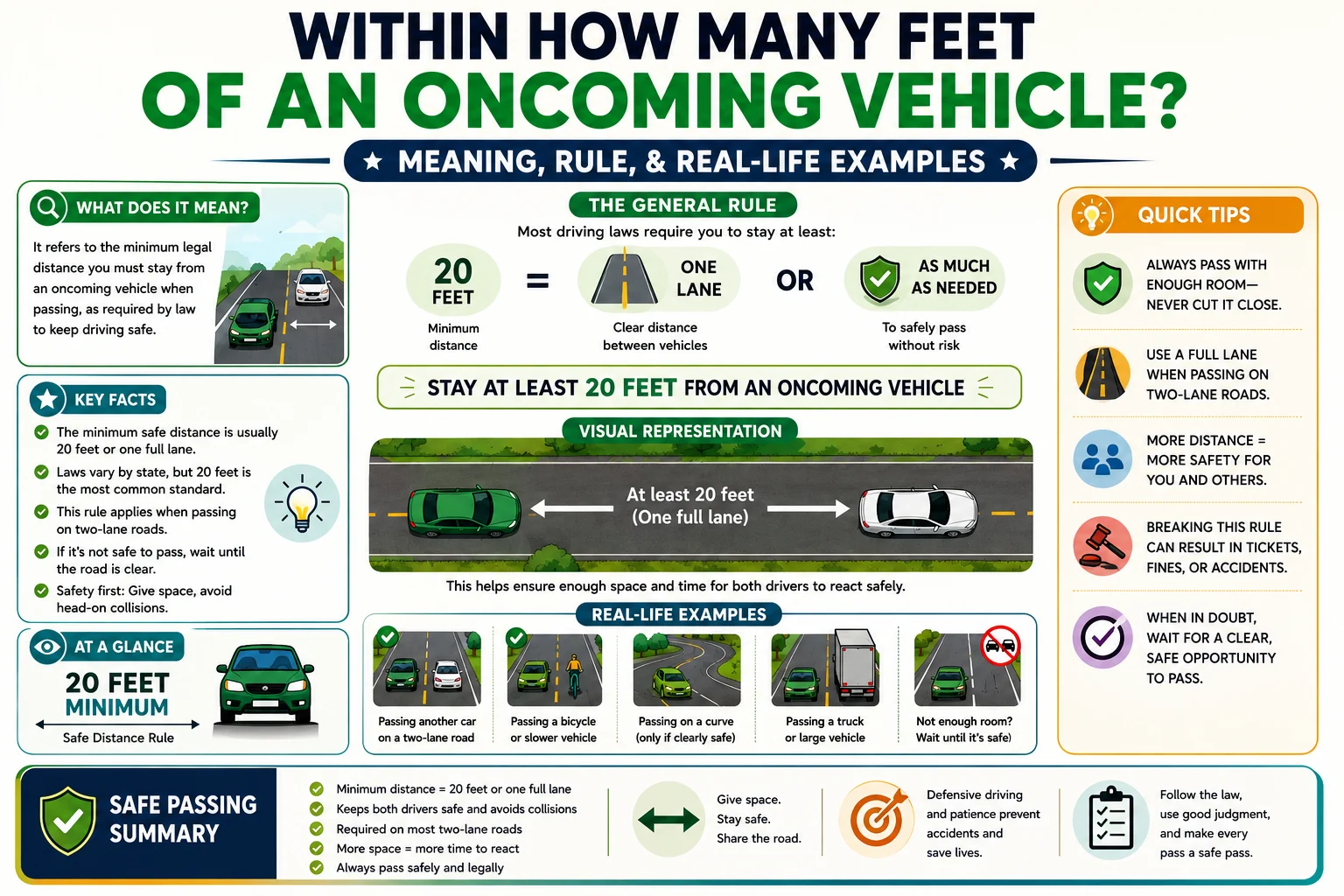
If you’re studying for a driving test or reviewing road safety rules, you may be wondering: within how many feet of an oncoming vehicle should you dim your headlights?
The answer is simple:
Drivers should switch from high beams to low beams when they are within 500 feet of an oncoming vehicle.
This is one of the most common questions found on driver’s license exams because it directly impacts road safety. High beams improve visibility at night, but they can also temporarily blind other drivers if used improperly.
Understanding when to dim your headlights helps prevent accidents, improves visibility for everyone on the road, and ensures compliance with traffic laws.
Quick Answer
Most driving manuals and traffic regulations state:
- Dim high beams within 500 feet of an oncoming vehicle.
- Use low beams when approaching other drivers.
- Avoid creating glare that affects visibility.
The rule can be summarized as:
Within 500 feet of an oncoming vehicle, switch from high beams to low beams.
This distance gives both drivers enough time to adjust their vision safely.
Understanding High Beams and Low Beams
Before discussing the 500-foot rule in detail, it’s important to understand the difference between high beams and low beams.
What Are High Beams?
High beams are bright headlights designed to illuminate a larger area of the road.
They help drivers see:
- Farther ahead
- Wildlife near roads
- Obstacles in dark areas
- Curves and turns
High beams are especially useful on rural roads with little or no street lighting.
What Are Low Beams?
Low beams are standard headlights used during normal driving.
They are designed to:
- Illuminate the road safely
- Reduce glare for other drivers
- Provide adequate visibility in traffic
Low beams are required whenever another vehicle could be affected by your headlights.
Within How Many Feet of an Oncoming Vehicle Must You Dim Headlights?
The standard rule is:
The 500-Foot Rule
When an oncoming vehicle approaches within 500 feet:
- Turn off high beams.
- Switch to low beams.
- Continue using low beams until the vehicle passes.
This distance is recognized in many driver’s education programs and traffic laws.
Why 500 Feet?
At night, bright headlights can temporarily impair another driver’s vision.
Even a few seconds of reduced visibility can be dangerous.
The 500-foot rule provides enough distance for:
- Eye adjustment
- Reduced glare
- Safer decision-making
- Better road awareness
Driver Safety Benefits
Following this rule helps:
- Reduce nighttime collisions
- Improve visibility for all drivers
- Prevent temporary blindness
- Support defensive driving practices
How High Beams Affect Oncoming Drivers
Many people underestimate how disruptive high beams can be.
Glare Reduces Visibility
Bright lights create glare that can make it difficult to see:
- Lane markings
- Road signs
- Pedestrians
- Curves
Glare becomes even more problematic on dark roads.
Slower Reaction Times
When drivers are blinded by bright lights, they may need several seconds for their eyes to readjust.
During that time, important hazards may go unnoticed.
Increased Accident Risk
Improper high-beam use contributes to:
- Lane departures
- Missed obstacles
- Rear-end collisions
- Head-on crashes
This is why headlight regulations are taken seriously.
Headlight Laws and Driving Regulations
Many driver licensing exams include questions about high-beam distance requirements.
Common Driving Test Question
A frequently asked question is:
“Within how many feet of an oncoming vehicle should you dim your high beams?”
Correct answer:
- 500 feet
Knowing this answer is important for passing written driving exams.
Variations by Jurisdiction
Although many areas use the 500-foot standard, traffic laws can vary.
Drivers should always review:
- Local driving manuals
- State regulations
- Provincial laws
- National traffic codes
Why Laws Matter
Traffic laws are designed to:
- Improve road safety
- Reduce accidents
- Standardize driver behavior
- Protect all road users
When to Use High Beams
High beams are valuable when used correctly.
Rural Roads
High beams work best on roads with:
- Minimal traffic
- Limited street lighting
- Long visibility distances
Dark Country Highways
Drivers often encounter:
- Wildlife
- Farm equipment
- Debris
High beams improve hazard detection.
Low-Traffic Conditions
Use high beams when:
- No vehicles are nearby
- Road conditions are dark
- Visibility is limited
Always switch back to low beams when traffic appears.
When Not to Use High Beams
Knowing when not to use high beams is just as important.
Oncoming Traffic
This is the most important rule.
Dim headlights when approaching within:
- 500 feet of an oncoming vehicle
Following Another Vehicle
Many driving manuals recommend switching to low beams when following another vehicle closely.
Bright lights reflected in mirrors can distract the driver ahead.
Fog, Rain, and Snow
Many people mistakenly use high beams during bad weather.
In reality, high beams often make visibility worse because light reflects off:
- Fog
- Rain
- Snow
- Dust
Low beams usually provide better visibility.
Night Driving Safety Tips
Driving at night presents unique challenges.
Keep Windshields Clean
Dirty glass increases glare and reduces visibility.
Clean both:
- Interior surfaces
- Exterior surfaces
Adjust Mirrors Properly
Correct mirror adjustment helps minimize glare from other vehicles.
Reduce Speed
Visibility decreases at night.
Driving slightly slower gives you more time to react.
Stay Alert
Nighttime fatigue increases accident risk.
Take breaks during long drives.
Common Mistakes Drivers Make
Many motorists unintentionally misuse headlights.
Forgetting to Dim High Beams
Drivers sometimes leave high beams on too long.
This can blind approaching drivers.
Using High Beams in Fog
This often creates more glare and reduces visibility.
Waiting Too Long to Switch
Some drivers wait until the vehicle is very close.
Switching at the proper distance is safer.
Assuming Bright Roads Require High Beams
Urban areas usually have:
- Streetlights
- Traffic signals
- Reflective signs
High beams are often unnecessary.
Real-World Examples
Example 1: Rural Highway
You are driving on a dark country road.
No vehicles are visible.
Using high beams is appropriate.
Example 2: Approaching Traffic
You notice headlights ahead.
When the vehicle comes within approximately 500 feet:
- Switch to low beams.
Example 3: Heavy Fog
Visibility drops due to fog.
Instead of high beams:
- Use low beams.
- Slow down.
- Increase following distance.
Benefits of Following the 500-Foot Rule
The rule provides several advantages.
Improved Safety
Reducing glare helps all drivers see clearly.
Better Traffic Flow
Drivers feel more comfortable and confident.
Legal Compliance
Following traffic laws reduces the risk of citations.
Courtesy to Other Drivers
Safe driving includes respecting other road users.
Dimming headlights is a simple but important courtesy.
Conclusion
So, within how many feet of an oncoming vehicle should you dim your headlights?
The standard answer is:
500 feet.
This widely recognized driving rule helps reduce glare, improve nighttime visibility, and prevent accidents. Whether you’re preparing for a driver’s license exam or simply reviewing safe driving practices, remembering the 500-foot rule can make you a safer and more responsible driver.
Whenever you see an oncoming vehicle approaching at night, switch from high beams to low beams before reaching 500 feet. This simple action protects both you and the other driver.
Frequently Asked Questions
Within how many feet of an oncoming vehicle should you dim your high beams?
You should dim your high beams within 500 feet of an oncoming vehicle.
Why is the 500-foot rule important?
It reduces glare and helps prevent temporary vision impairment for other drivers.
Can high beams cause accidents?
Yes. Improper use of high beams can reduce visibility and increase crash risk.
Should I use high beams in fog?
No. Low beams are generally safer because high beams reflect off fog and reduce visibility.
Is the 500-foot rule on driver’s license tests?
Yes. Many written driving exams include questions about the proper distance for dimming headlights near oncoming traffic.
Discover More
37 Inches Is How Many Feet?
How Many Square Feet Does One Pallet of Sod Cover?
How Many Feet Is 196 cm?