

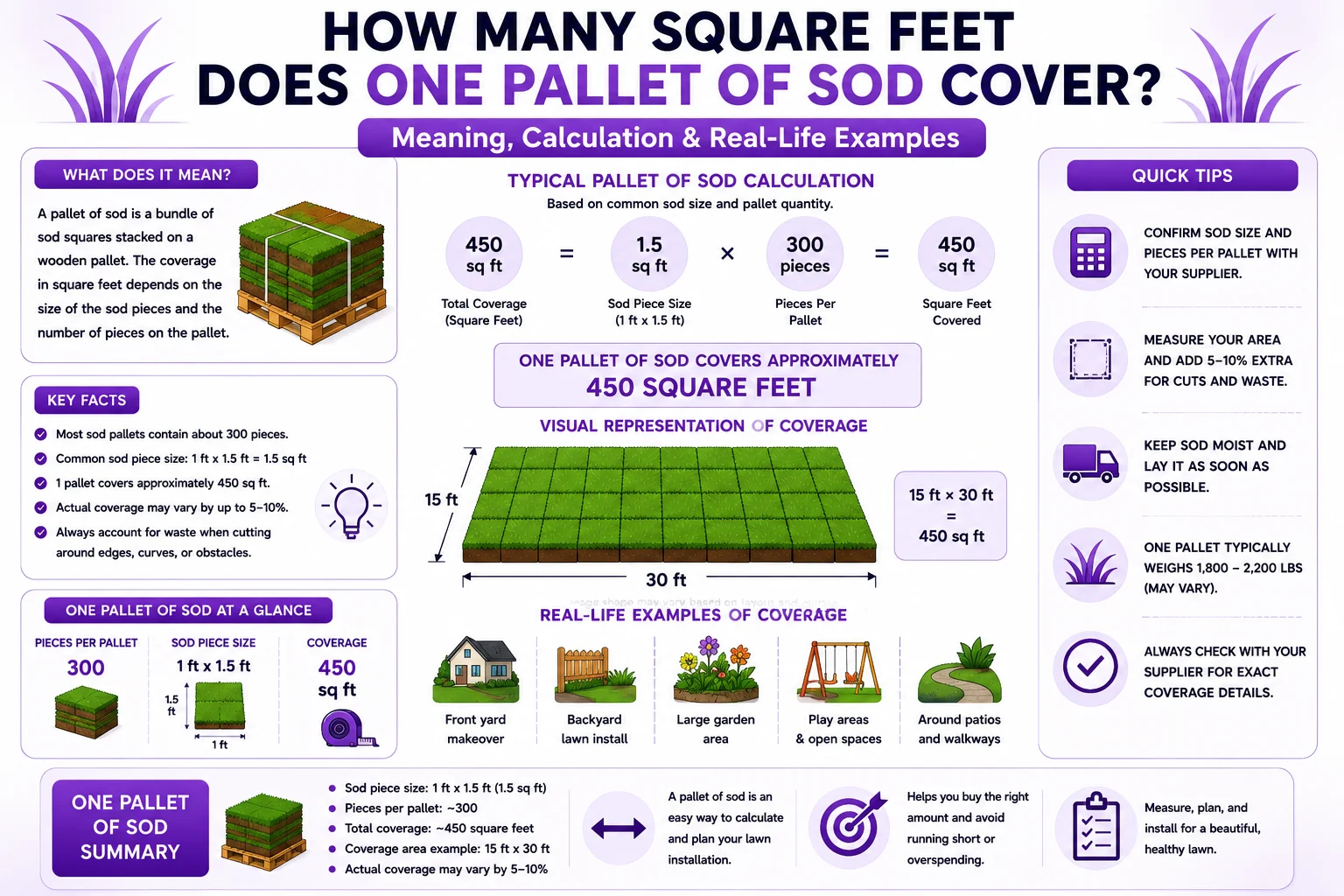
If you are wondering how many square feet does one pallet of sod cover, the short answer is that a standard pallet of sod usually covers between 400 and 500 square feet.
Most residential sod pallets average around:
- 450 square feet of coverage
However, the exact amount depends on:
- Sod type
- Grass variety
- Pallet size
- Sod piece dimensions
- Supplier standards
Understanding sod coverage is important before starting any landscaping or lawn renovation project. Buying too little sod can delay installation, while ordering too much may waste money.
In this guide, you will learn how sod pallets are measured, how to calculate lawn size, how many pallets you need, and practical tips for successful sod installation.
What Is a Pallet of Sod?
A pallet of sod is a stacked shipment of pre-grown grass and soil held together by roots.
Sod is commonly used to create instant lawns for:
- Homes
- Parks
- Sports fields
- Commercial landscapes
Instead of planting grass seed and waiting for growth, sod provides immediate green coverage.
Why Sod Is Sold by Pallets
Because sod is heavy and bulky, suppliers bundle it into pallets for easier:
- Transportation
- Delivery
- Installation
- Inventory management
A full pallet usually contains many individual sod pieces or rolls.
How Many Square Feet Does One Pallet of Sod Cover?
The average pallet of sod covers:
- 400 to 500 square feet
Most suppliers advertise approximately:
1 Pallet of Sod≈450 Square Feet
This amount is enough to cover:
- A small front yard
- A medium backyard section
- Several landscaping zones
Typical Sod Coverage Ranges
| Sod Type | Average Coverage |
|---|---|
| Standard Slab Sod | 400–500 sq ft |
| Mini Roll Sod | 450–500 sq ft |
| Big Roll Sod | 500–700 sq ft |
| Specialty Sod | Varies by supplier |
Always confirm exact coverage with your local sod farm or supplier because pallet sizes differ by region.
Standard Sod Pallet Sizes Explained
Not all sod pallets are identical.
Several factors affect total square footage.
Slab Sod
Slab sod comes in rectangular pieces.
Common slab sizes include:
- 16″ × 24″
- 18″ × 24″
These pieces are stacked onto pallets until they reach the desired coverage amount.
Roll Sod
Roll sod comes in long strips.
It is commonly used for:
- Large commercial projects
- Golf courses
- Athletic fields
Roll sod often covers larger areas per pallet.
Regional Differences
Some suppliers package:
- 400 sq ft pallets
- 450 sq ft pallets
- 500 sq ft pallets
Climate and grass type can influence packaging sizes.
How to Calculate Sod Coverage
Measuring your lawn correctly helps determine how many pallets you need.
Step 1: Measure Your Yard
Measure:
- Length
- Width
For rectangular lawns:
Square Feet=Length×Width
Example:
30×20=600
A 30-foot by 20-foot lawn equals:
- 600 square feet
Step 2: Divide by Pallet Coverage
If one pallet covers 450 square feet:
600÷450≈1.33
You would need:
- About 2 pallets
It is always smart to round up slightly.
Step 3: Add Extra for Waste
Professionals recommend adding:
- 5% to 10% extra sod
This accounts for:
- Cutting
- Curves
- Irregular edges
- Installation mistakes
Sod Coverage Chart by Yard Size
This chart shows common lawn sizes and estimated pallet needs.
| Lawn Size | Approximate Pallets Needed |
|---|---|
| 400 sq ft | 1 pallet |
| 800 sq ft | 2 pallets |
| 1,200 sq ft | 3 pallets |
| 2,000 sq ft | 4–5 pallets |
| 5,000 sq ft | 11–12 pallets |
This helps homeowners estimate costs quickly.
Factors That Affect Sod Coverage
Several details can change how much area one pallet actually covers.
Grass Type
Different grass species have different densities.
Popular sod types include:
- Bermuda grass
- Kentucky bluegrass
- Zoysia grass
- St. Augustine grass
Some grasses are cut thicker than others.
Sod Thickness
Thicker sod may contain:
- More soil
- Stronger roots
However, thicker sod can slightly reduce total pallet coverage.
Waste and Trimming
Curved lawns create extra trimming waste.
Areas around:
- Trees
- Walkways
- Flower beds
often require cutting sod pieces into smaller shapes.
Common Uses for Sod Pallets
Sod pallets serve many landscaping purposes.
Residential Lawns
Most homeowners use sod for:
- New home lawns
- Bare patch repair
- Backyard renovations
Instant grass dramatically improves curb appeal.
Sports Fields
Athletic fields often use sod because it establishes quickly.
Common sports uses include:
- Soccer fields
- Baseball fields
- Football fields
Commercial Landscaping
Businesses use sod for:
- Office complexes
- Hotels
- Parks
- Shopping centers
Fresh sod creates a polished appearance immediately.
Benefits of Sod Compared to Grass Seed
Many people choose sod instead of traditional seeding.
Instant Results
Sod provides an immediate green lawn.
Seed may take:
- Weeks to germinate
- Months to fully establish
Erosion Control
Sod helps stabilize soil quickly.
This is useful on:
- Slopes
- Drainage areas
- Construction sites
Faster Usability
Most sod lawns become usable sooner than seeded lawns.
This makes sod ideal for families and public spaces.
Drawbacks of Sod
While sod offers many advantages, it also has limitations.
Higher Initial Cost
Sod costs more upfront than grass seed.
Expenses include:
- Material
- Delivery
- Installation
Time Sensitivity
Fresh sod must be installed quickly.
Leaving pallets unused for too long may damage the grass.
Water Requirements
New sod requires heavy watering during establishment.
This can temporarily increase water bills.
Common Mistakes When Buying Sod
Many homeowners make avoidable errors.
Ordering Too Little Sod
Underestimating square footage can leave unfinished gaps.
Always measure carefully.
Ignoring Waste
Odd-shaped lawns usually require extra material.
Without waste allowance, you may run short.
Poor Soil Preparation
Sod performs best on properly prepared soil.
Skipping preparation can lead to:
- Poor rooting
- Uneven growth
- Dry patches
Tips for Installing Sod Successfully
Proper installation improves long-term lawn health.
Prepare the Soil
Before laying sod:
- Remove weeds
- Loosen compacted soil
- Add nutrients if needed
- Level the surface
Healthy soil supports faster root establishment.
Install Sod Immediately
Fresh sod should be installed within:
- 24 to 48 hours after delivery
Delays can dry out the roots.
Water Thoroughly
New sod requires consistent moisture.
During the first weeks:
- Water deeply
- Avoid letting sod dry out
Stagger the Seams
Lay sod pieces like bricks rather than straight rows.
This improves appearance and reduces visible seams.
Cost Considerations for Sod
Understanding pricing helps with project budgeting.
Average Sod Cost
Typical sod costs range from:
- $0.30 to $0.80 per square foot
Premium grass varieties may cost more.
Delivery Fees
Sod is extremely heavy.
Many suppliers charge delivery fees based on:
- Distance
- Number of pallets
- Equipment needs
Professional Installation
Hiring professionals adds labor costs but may improve results.
Installation pricing often includes:
- Soil preparation
- Sod laying
- Initial watering
Real-World Example
Suppose you have a backyard measuring:
- 50 feet × 40 feet
Calculation:
50×40=2000
Your yard equals:
- 2,000 square feet
If one pallet covers 450 square feet:
2000÷450≈4.44
You would likely need:
- 5 pallets
Adding extra coverage helps account for trimming waste.
Conclusion
So, how many square feet does one pallet of sod cover?
Most sod pallets cover between 400 and 500 square feet, with 450 square feet being the most common average.
1 Pallet of Sod≈450 Square Feet
Knowing the correct coverage helps you:
- Estimate costs
- Plan landscaping projects
- Avoid ordering mistakes
- Reduce waste
Before buying sod, always measure your lawn carefully, account for waste, and confirm pallet sizes with your supplier.
With proper preparation and installation, sod can create a beautiful lawn almost instantly.
Frequently Asked Questions
How many square feet does one pallet of sod cover?
Most pallets cover between 400 and 500 square feet, with 450 square feet being the average.
How many pallets of sod do I need for 1,000 square feet?
You typically need about 2 to 3 pallets depending on pallet size and waste allowance.
How much does a pallet of sod weigh?
A standard pallet of sod usually weighs between 2,500 and 3,000 pounds.
Should I buy extra sod?
Yes. Experts recommend ordering 5% to 10% extra to account for trimming and mistakes.
How long can sod stay on a pallet?
Fresh sod should ideally be installed within 24 to 48 hours after delivery.
Discover More
How Many Square Feet Is a Baseball Field?